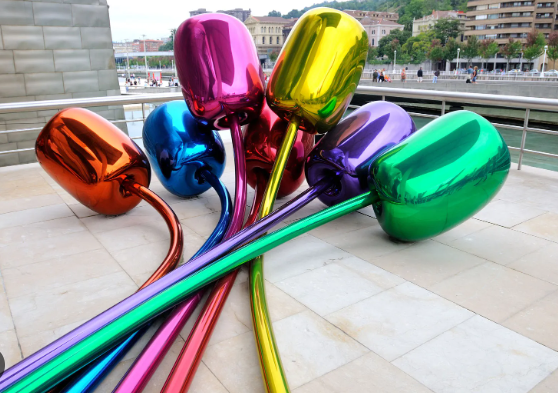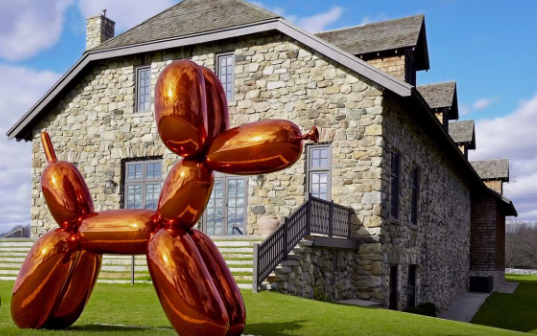
What Kind of Art Does Public Space Need?
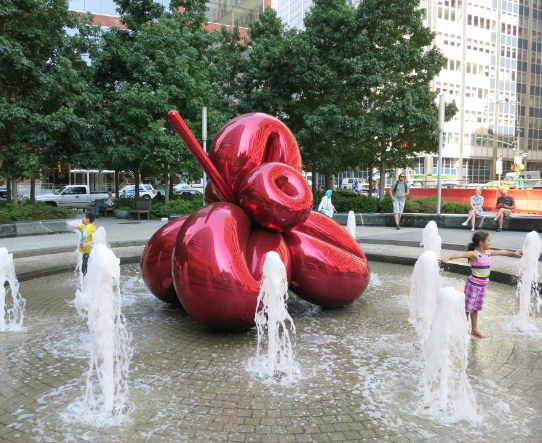
In city squares, parks, commercial districts, or cultural landmarks, public art plays a role far beyond mere “decoration.” It needs to be recognizable from a distance, understood by people of different ages and cultural backgrounds, and interact with its surroundings.
Therefore, when people see Jeff Koons’ brightly colored, exaggeratedly shaped balloon sculptures in public spaces, controversy naturally arises: Are works like Jeff Koons’ Balloon Sculpture really suitable for outdoor public spaces?
High recognizability is a natural advantage of public art.
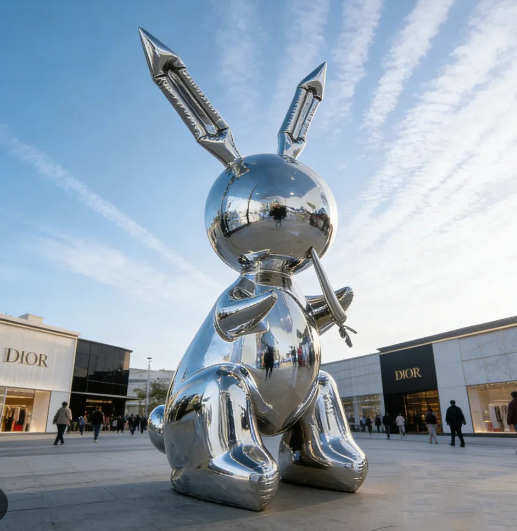
From the perspective of public art, Jeff Koons’ balloon series possesses a very obvious advantage—extremely high recognizability.
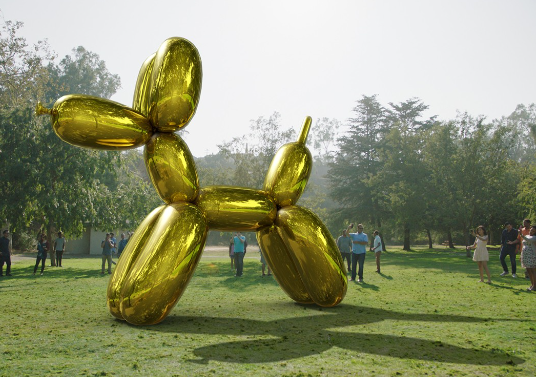
Balloons, rabbits, and cartoonish animals have virtually no barrier to understanding. Even passersby unfamiliar with contemporary art can immediately “understand” the basic form of the work. This intuitiveness gives works like the Balloon Bunny Statue a strong presence in public spaces, preventing them from being overwhelmed by surrounding buildings or landscapes.
In an outdoor environment, the ability to quickly attract attention is itself an important value.
The Challenges of Outdoor Environments to Materials and Craftsmanship
Of course, public spaces are not simply about aesthetics.
Outdoor sculptures face constant exposure to sunlight, rain, temperature fluctuations, and pedestrian traffic. Jeff Koons’ balloon sculptures are typically made of highly polished stainless steel, a material well-suited to outdoor environments in terms of durability and structural stability.
Meanwhile, the smooth, mirrored surface reflects the sky, architecture, and pedestrians, creating a visually dynamic effect that changes with the time of day and weather conditions. This interaction with the environment is a key reason why Jeff Koons’ Balloon Sculpture is frequently used in public spaces.
Controversy: Should Public Art Be “Pleasing”?
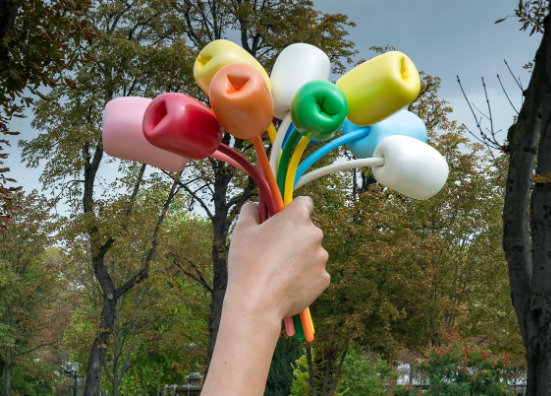
Opponents often raise the question: Should public art be so “pleasing,” even resembling toys?
Traditionally, public sculptures are often expected to possess a commemorative, solemn, or historical narrative quality. Jeff Koons’ work, however, clearly takes a different path—light, bright, and even slightly humorous.
But from the perspective of actual use in outdoor spaces, the function of public art is changing. More and more cities aspire to make public spaces open, welcoming, and interactive, rather than mere monuments for distant viewing. In this respect, the Balloon Bunny Statue is more likely to bridge the gap between art and the public.
Conclusion: Suitability Depends on Spatial Objectives
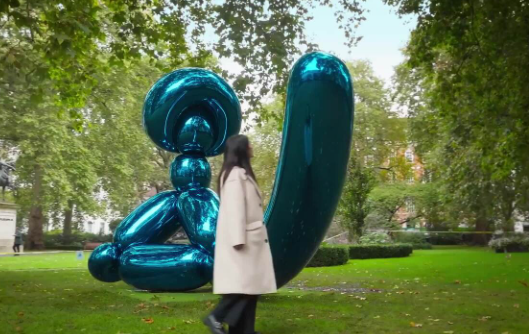
Whether Jeff Koons’ Balloon Sculpture is suitable for public spaces is not an absolute question.
If the goal of a public space is to commemorate history or express serious themes, then this style may not be a good fit; but if the goal is to enhance urban vitality, increase interactivity, and create visually memorable moments, then balloon sculptures undoubtedly have a strong advantage.
For outdoor environments, the truly crucial question may not be “Does it resemble art?” but rather: Can it establish a lasting connection with the space, the public, and urban life?
From this perspective, Jeff Koons’ balloon sculptures at least offer a possibility of public art worthy of serious discussion.