
Budapest is not only renowned for its Danube River, thermal spas, and historical architecture, but it’s also a city perfectly suited for exploring public art on foot. Many statues are directly located in squares, along riverbanks, in parks, and on street corners, visible without needing to enter museums. Some commemorate kings and national heroes, others document the trauma of war, and still others blend seamlessly into the urban environment in a relaxed, mysterious, or everyday way.
For those who enjoy outdoor travel, urban photography, and cultural strolls, discovering famous statues in Budapest is a direct way to understand the city’s history and spatial structure.
Historical Statues in Heroes’ Square
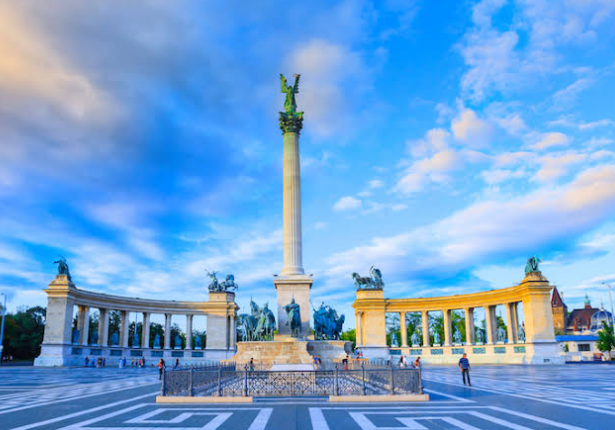
Heroes’ Square is one of Budapest’s largest open-air memorial spaces and a key location for observing Hungarian national monumental sculptures. At the center of the square stands the towering Millennium Column, topped with a statue of the Archangel Gabriel, surrounded by equestrian statues of Magyar chieftains.
The colonnades on either side of the square also contain statues of numerous Hungarian kings, political figures, and military leaders. Most figures are standing, adorned with crowns, weapons, scepters, or reliefs depicting historical events, creating a dignified and orderly overall composition.
Heroes’ Square connects to City Park, making it ideal for a walking tour. After visiting the square, you can continue into the park to find public sculptures of entirely different styles.
The Mysterious Image of the Budapest Anonymous Sculpture
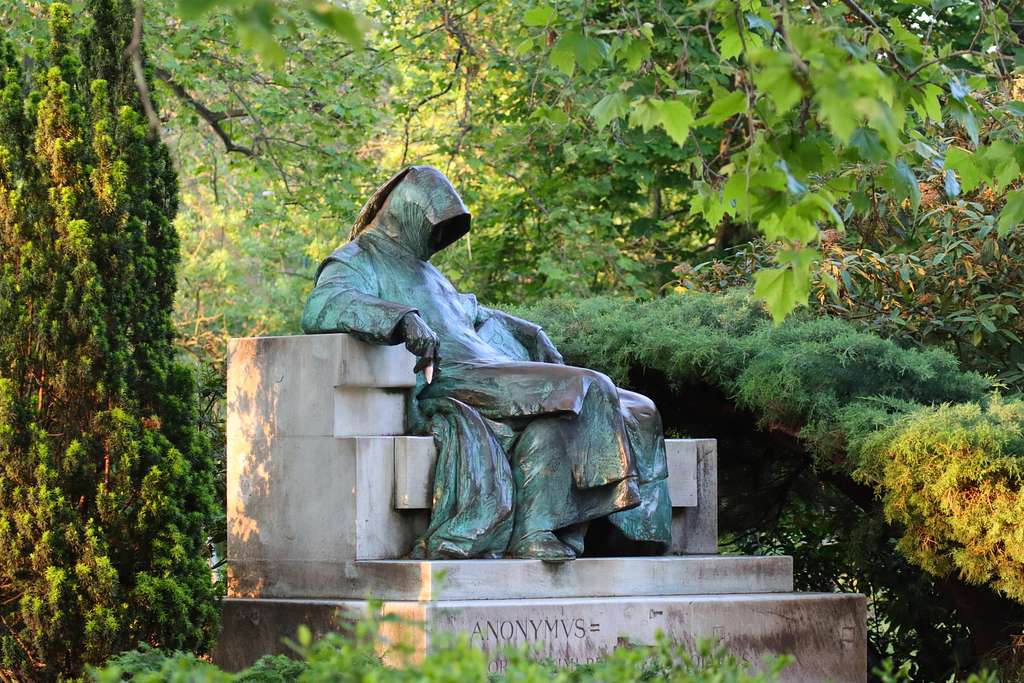
Located near Wojdács Castle in City Park, the Budapest Anonymous Sculpture is a highly recognizable bronze work in Budapest. The statue depicts Anonymus, an anonymous medieval scribe, remembered for writing the Gesta Hungarorum.
The figure sits in a chair, wearing a wide robe, his head covered by a hood, his face hidden deep within. The sculptor did not create a specific face, but rather used the blurred facial contours to represent the historical fact that his true identity has been lost to history.
The statue holds a writing instrument in its hand, one of the most important symbolic elements of the entire work. The hood represents the unknown identity, and the pen represents the preserved text. Many visitors touch the pen nib, hoping for inspiration for their writing or good luck in their studies.
Surrounded by trees, lawns, and castle-like buildings, the statue enjoys a tranquil environment, perfect for leisurely observation of its details and a suitable stop on any city park photography route.
The Footwear Monument on the Danube Bank
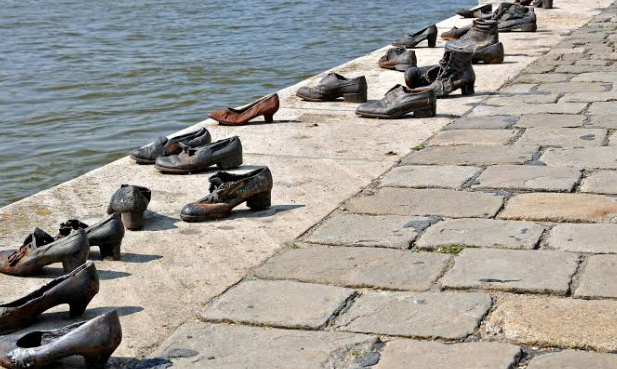
The Footwear Monument on the Danube Bank is one of Budapest’s most contemplative outdoor memorials. Located on the riverbank near the Hungarian Parliament Building, it consists of numerous cast-iron shoes, including men’s, women’s, and children’s shoes.
These shoes are not ordinary street decorations, but rather a memorial to the victims killed on the banks of the Danube during World War II. The empty shoes suggest that the figures have vanished, leaving only traces of life.
Compared to traditional tall monuments, this work is positioned low, almost touching the riverbank. Visitors need to get close to see it to notice the size, shape, and arrangement of the shoes. People often place flowers, candles, or small stones inside the shoes, making it a public space for ongoing commemoration.
Because the monument is adjacent to the Danube promenade, visitors should be mindful of the riverbank and passersby, and maintain quiet and respect.
The Little Princess Statue and Urban Daily Life
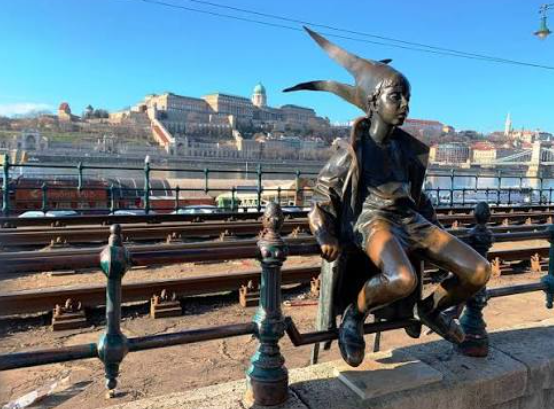
Along the Danube River stands a smaller, more relaxed statue known as the “Little Princess Statue.” It depicts a girl wearing a paper crown, sitting on a railing with her hands near her legs in a natural pose.
The statue is small and lacks a high pedestal. It blends directly with the riverside railings, walkways, and cityscape, easily creating a sense of intimacy. Visitors can see the Danube, tram tracks, and the Buda Castle area on the opposite bank from nearby.
Compared to the grand statues in Heroes’ Square, the Little Princess Statue is closer to everyday life. It illustrates that public art doesn’t necessarily have to commemorate significant historical figures; it can also stem from childhood imagination, family memories, and the emotions of ordinary people.
The area around the statue is walkable, but it’s popular with tourists, so avoid obstructing walkways when taking photos.
Sculptures Connecting Budapest by Walking
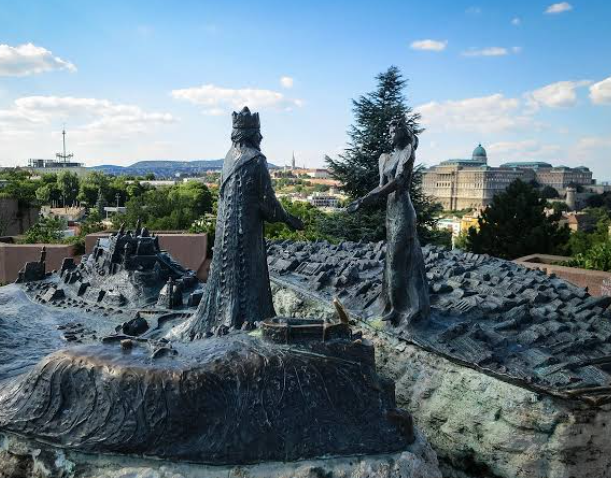
Budapest’s famous statues are widely distributed, allowing for different outdoor routes to be planned according to different areas. The city park route can include Heroes’ Square, Wojdács Castle, and the Anonymus statue; the Danube route can connect the Shoe Monument, the Little Princess statue, the Parliament Building, and the riverside landscape.
The advantage of viewing sculptures on foot is that you can simultaneously observe the relationship between the work and its surroundings. The scale, orientation, pedestal, and posture of the figures are often related to the space they occupy. Works located in the center of squares usually emphasize monumentality, while those placed on railings, lawns, or riverbanks are more likely to interact with visitors.
The famous statues in Budapest are not a unified group of works. They represent national history, memories of war, medieval writing traditions, and daily urban life. Viewing them one by one on an outdoor walk allows people not only to get to know these statues but also to understand more concretely how Budapest preserves its history in public spaces.